
home
arrow

Towards Deployable Physical Caregiving Robots: A Success Story in Robot-Assisted Feeding

Advancing independence through robotic caregiving, promote greater autonomy and improve quality of life

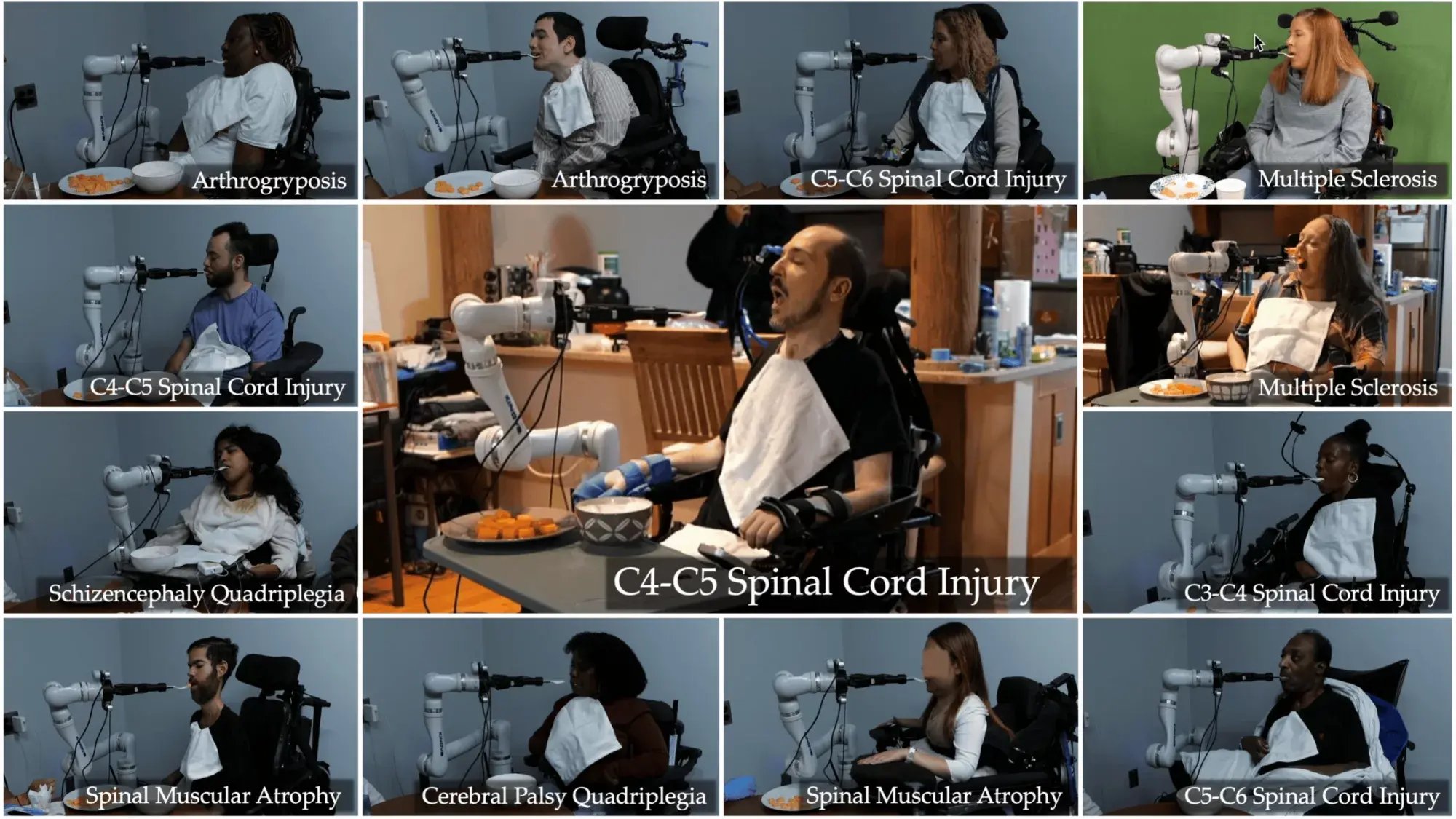
13 Recipients

Tested successfully across 3 diverse settings:

laboratory, medical center,

and home environments

↓↓↓

Risk to human life

"Kinova’s ergonomic, compact and light weight design, and flexible mounting options
on wheelchairs make it an ideal choice for assistive robotics and human-robot
interaction research. Additionally, its growing community of researchers facilitates the
sharing of software resources and replicating state-of-the-art projects, which further
accelerates progress in our work."

Dr. Tapomayukh Bhattacharjee, Assistant Professor, Computer Science

The Challenge


Robotics for physical caregiving offers immense potential to enhance the lives of individuals with mobility challenges. The EmPRISE Lab aims to increase the scope of activities of daily living that robots can assist with—further empowering individuals and easing the workload on caregivers. Among these activities is feeding, which caregivers often cite as one of the most time-consuming. Feeding assistance is complex, requiring robots to perform two critical tasks:


  1. Bite Acquisition: Demands various dexterous manipulation skills (skewering, scooping, twirling) to handle diverse food types and sequence them efficiently.
  2. Inside-Mouth Bite Transfer: Requires delicately placing food inside the care recipient's mouth, complicated by medical conditions such as limited mouth openings, muscle spasms, and precise targeting.


These processes require the system to adapt in real time to both the user's preferences and the surrounding context.
The Solution


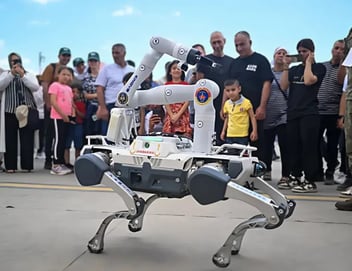
DPM TECH developed advanced quadruped robots, referred to as "robot dogs", equipped with Kinova Gen3 robotic arms with adaptive grippers. The platform is equipped with the ultra-lightweight Gen3 robotic arm from Kinova with adapative gripper , which delivers a powerful tool for safe, remote operations in hazardous areas. The Kinova arm's function on the explosive ordnance reconnaissance and intervention robot allows operations to be conducted from a secure distance, reducing the need for personnel to directly intervene in high-risk

KEY FEATURES

Bite Acquisition:


Development of a vision-parameterized library of food manipulation skills, leveraging commonsense reasoning and few-shot learning via foundation models.

Inside-Mouth Bite Transfer System:


Integrates real-time multi-view mouth perception (for robust detection amid occlusions) and interaction-aware control (using multimodal sensing to adapt to physical interactions).

On-the-fly personalization pipeline:


Translates user preferences (natural language/gestures) into safe robot behavior updates using large language models.

RESULTS


Components of the system have been tested successfully with 13 care recipients facing severe mobility limitations. These individuals had conditions including Multiple Sclerosis, Spinal Cord Injury (C3-C6), Arthrogryposis, Spinal Muscular Atrophy, Schizencephaly Quadriplegia, and Cerebral Palsy Quadriplegia. Testing took place across 3 diverse settings: laboratory, medical center, and home environments.


Furthermore, the system was also deployed in the homes of 2 care recipients (who were also co-researchers) for a five-day evaluation. It assisted them across diverse real-world contexts, including watching TV while eating and dining with friends, highlighting the feasibility and real-world application of these solutions. The project garnered significant accolades at the HRI 2024 conference, winning the Best Demo Award and being named a finalist for the Best Systems Paper.

Tested successfully with 13 care recipients across 3 diverse settings
Won Best Demo Award
Selected as a finalist for the Best Systems Paper at HRI 2024 conference
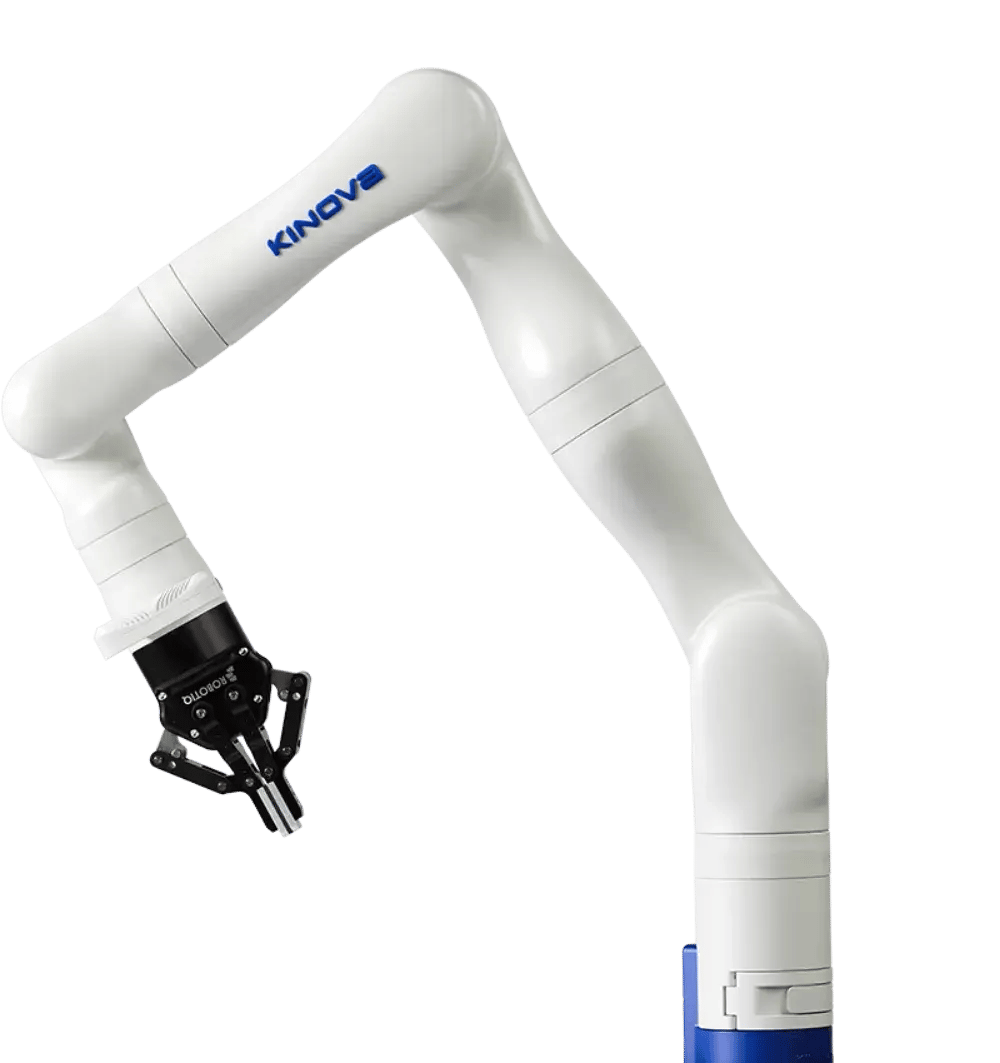
Kinova-Gen3-robot

The Kinova Gen3 ultra-lightweight robotic arm

Showcase how you achieved real results

Submit My Success Story
No Case Study Yet?