
home
arrow

Freeing hands and automating processes at a chemistry laboratory

Automating repetitive manual tasks to allow researchers to perform value-added work

2 Days

To complete experiments

that previously took 1-3 weeks of repetitive tasks

↑↑↑

Efficiency and work quality

“It was relatively easy to learn how to use this robot. The lab staff had experience working with SCARA robots before, but we were new to these 6-axis robots.”
 
Parisa Shiri, Hein Lab staff

The Challenge


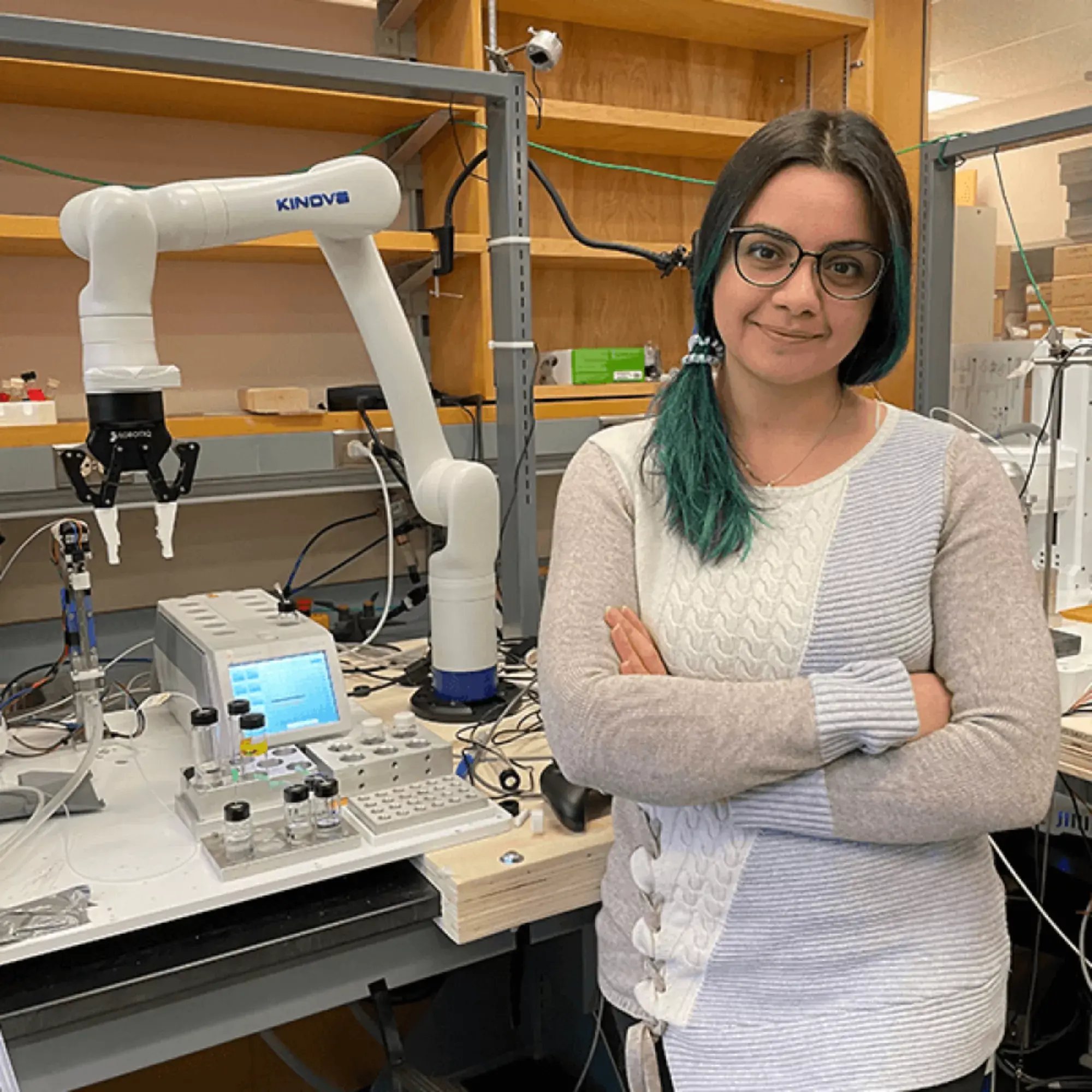
There is a lot of equipment around and many tasks to be carried out: noting results, discussing them with the team, instruments maintenance, cleaning. Some manual tasks that require less “brainpower”, let's put it that way, may include moving the vials from one point to another, opening and closing them, putting them in a machine, etc. From that point of view, it would make sense to have a non-human assistant around, don't you think? Conventional, labor-intensive workflows for finding solubility values require sophisticated analytical instrumentation (i.e., high-performance liquid chromatography (HPLC)).
The Solution


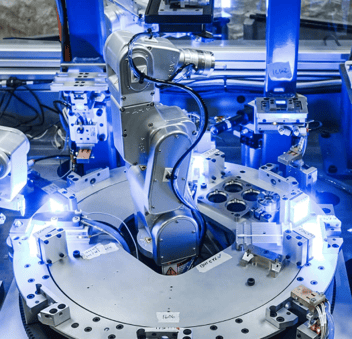
The group seeks to design a generalizable tool capable of experimentally mapping the physical and chemical properties of any target chemical system. In this paradigm, the exact sequence of actions carried out by the automation is not predefined — the experimental goal is defined along with conditional instructions to enable the system to make autonomous decisions. This strategy more closely mimics the actions of an expert laboratory assistant. In the specific case of their solubility workflow, the group wanted a modular, closed-loop robotic platform that was guided by simple computer vision, rather than complex analytics. The system would require no prior knowledge of chemistry involved, and would be able to detect failures in the workflow to adapt accordingly. This system would be suitable for any solid-solvent combination without specialized adjustments. The modularity of the platform would enable it to easily perform any related experiment requiring solid/liquid addition, mixing/heating, and optical determination of homogeneity.

KEY FEATURES

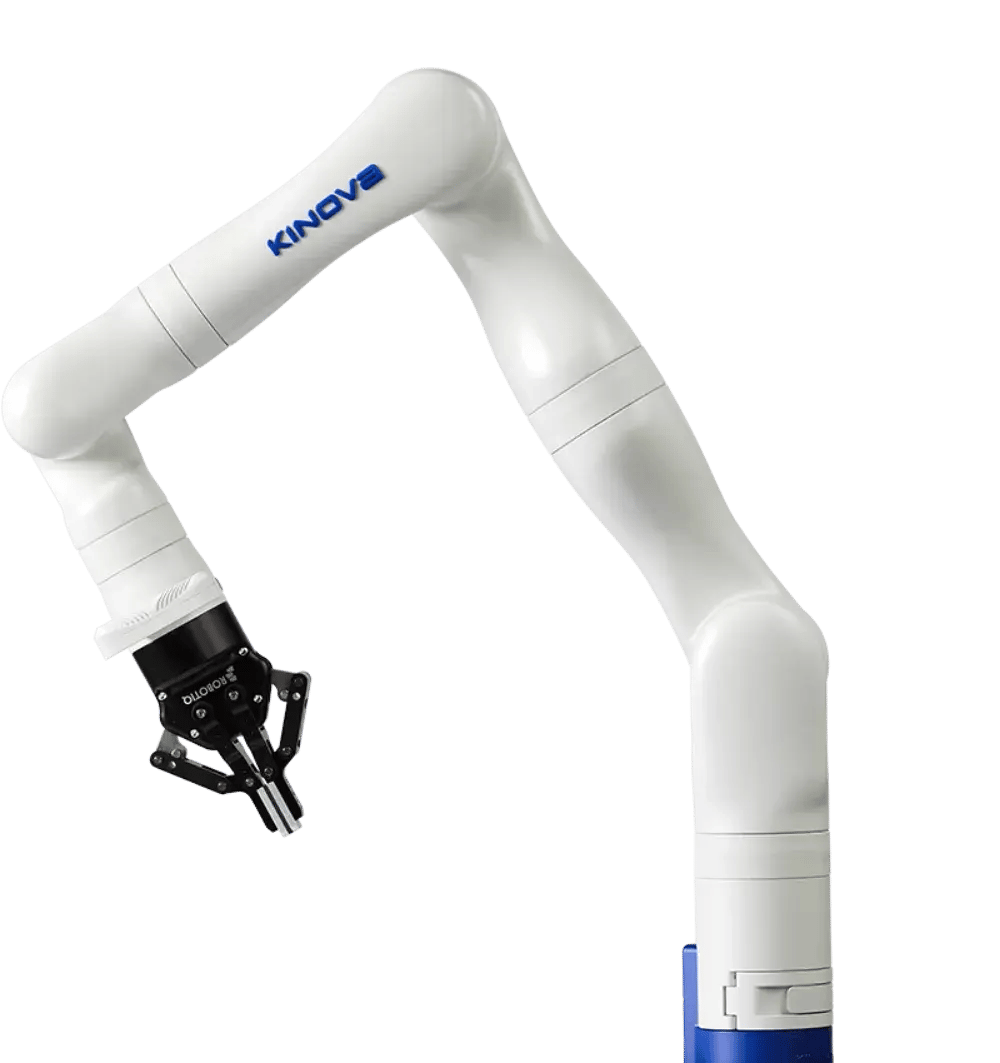
Kinova Gen3 6-axis robotic arm with solid and liquid handling capabilities:


The central hardware of the platform, selected for its ability to automate manual manipulation tasks.

Modular, closed-loop platform guided by simple computer vision:


A system designed to make autonomous decisions using a webcam rather than complex analytics, allowing it to detect failures and adapt accordingly.

Featuring a teach-pendant-like GUI (graphical user interface)


A user-friendly interface that provides an easy learning curve for laboratory staff.

RESULTS


The system developed by Hein lab has been used in a workflow to determine the solubility of various compounds without human intervention. It has been capable of finding solubility values of a solid in multiple solvents overnight. These autonomous experiments were performed a lot faster than with the usual, manual method. Between one and three weeks of repetitive tasks for researchers versus two days for the platform. However, Prieto highlights the fact that the time gained wasn't the main advantage sought but rather the quality of the results that can be accessed without human intervention. The robot did work at night, meaning it was doing essentially what humans would have done during the day, allowing the researchers to perform value-added tasks during their lab shifts all week long.


Beyond solubility studies, the Hein Lab is moving towards using Kinova robotic arms for complex reaction monitoring, loading and unloading centrifuges, or manipulating samples for more complex operations.

0

for the platform to complete experiments that previously took 1-3 weeks manually

Finding solubility values of a solid in multiple solvents overnight without human intervention
Quality of the results that can be accessed without human intervention
System able to react to conditional variations
Allowing the researchers to perform value-added tasks 
Kinova-Gen3-robot

The Kinova Gen3 ultra-lightweight robotic arm

Showcase how you achieved real results

Submit My Success Story
No Case Study Yet?