
home
arrow

Foss Maritime Doubles Their ROI by Using Deep Trekker ROV for Hull Inspections

Replacing expensive and inefficient diver-based inspections with rapid, portable, and cost-effective robotic technology

$135650

In annual savings/earnings


↑↑↑

Operational deployment

speed

↑↑↑

Decision-making accuracy

with real-time

underwater intelligence

"We used divers and only minimally because of the cost. We have used the ROV way more than anticipated due to how easy it is to transport and deploy and it has saved the company a lot of money, in one case even to verify that divers were needed when there was reluctance to call them!"
 
Amanda Dayton, Manager of Contracts and Estimating
DTG3 ROV equipped with the Deep Trekker Precision Thruster operating in low visibility water - demonstrating how easy it is to navigate even in turbid situations.

The Challenge


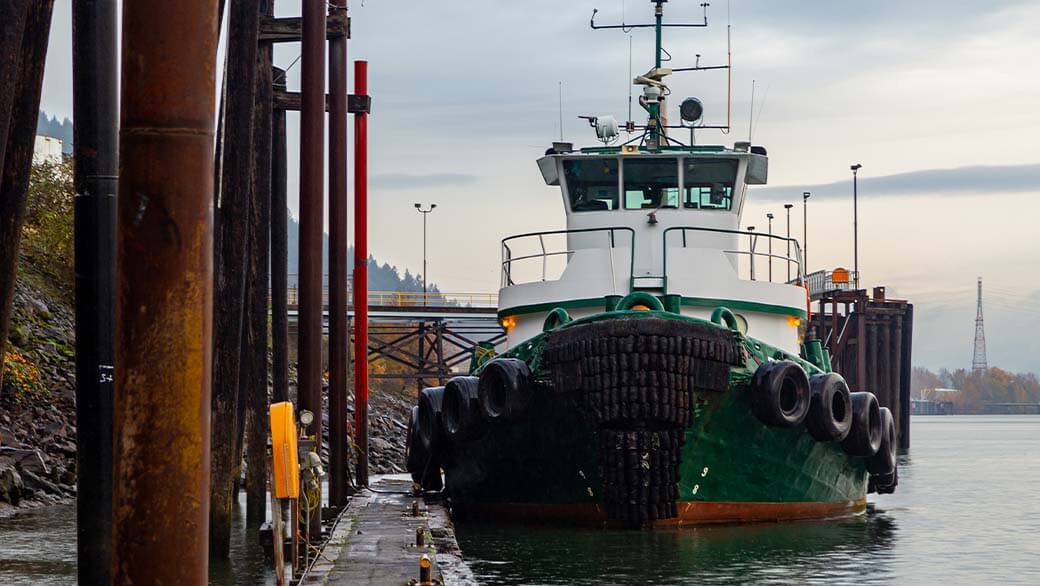
Foss Maritime previously relied on commercial divers for ship hull inspections at their Seattle shipyard, which was done only minimally due to high costs and logistical complexity. Relying on divers often meant losing half a day of productivity while waiting for them to arrive on-site. Also, due to safety concerns of having divers in the water, sometimes there are delays to ensure that the vessel is in a condition that is stable and safe enough for dive operations. In addition, Foss also notes that external vendors can impact overall project timelines due to our dependence on fitting into their schedules of availability and also having to wait until the dive team can all organize themselves to the same time and place. The company needed a more frequent and accessible way to verify hull conditions without the financial burden and safety risks associated with putting people in the water for routine checks.
The Solution


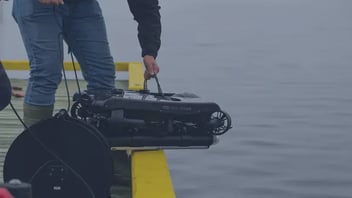
Foss Maritime integrated Deep Trekker ROVs into their shipyard operations for rapid, safe, and cost-effective hull inspections in any condition. The ROV's small size, light weight, and neutral buoyancy allow for immediate transportation and deployment by a single person. Its intuitive interface—designed without confusing buttons or extra equipment—allows for quick maneuvering and high-quality photo/video capture via a built-in DVR system.

KEY FEATURES

Intuitive Operation:


Simple controls and a DVR-enabled system for capturing real-time photos and video inspections.

Neutral Buoyancy & Maneuverability:


High operational speed and stable handling ensure thorough underwater inspections without getting "lost."

Cost-Effective Entry:


Low initial investment cost compared to traditional marine inspection equipment.

RESULTS


Tracking the first year of ROV use showed that Foss Maritime realized a measurable impact of $135,650 in savings and earnings, which was 100% higher than their original predictions. The transition from divers to ROVs allowed the shipyard to double the expected return on investment within 12 months. While co-workers and customers were initially skeptical, they became solid believers after witnessing the ROV’s efficiency and speed.


The ROV is now used significantly more than anticipated—on almost a weekly basis—because it is so easy to deploy. It is regularly called in to perform block checks during drydocking, inspect the hull and running gear of moored vessels, or provide helpful information on equipment failure. Because the ROV can be operated by one person, it is light enough to be manually carried from office-to-pier and does not require a shorepower connection, making it easy to transport to working vessels. This rapid operational deployment eliminated the downtime associated with waiting for divers to arrive, allowing for on-the-spot inspections that keep vessels moving. Since the ROV is deployed MUCH faster than divers, it offers significantly more schedule and operational flexibility, especially since diver health is not a concern and there are no delays to ensure the vessel is stable enough for human dive operations.

Furthermore, by capturing DVR footage instantly, management gained enhanced decision-making accuracy. In one specific instance, the ROV was used to verify that divers were actually needed when there was reluctance to call them, allowing management to verify hull issues with high confidence before committing to the expense of specialized dive teams and preventing unnecessary costs.

0

ROI vs. the initial financial forecasts

0
In annual savings/earnings
Improved Financial Performance
Rapid Operational Deployment
Superior operational flexibility
Enhanced decision-making accuracy with reliable underwater information

Showcase how you achieved real results

Submit My Success Story
No Case Study Yet?