

home
arrow

Waterville Woodcraft Achieves >99% Compliance with Automated Drawer Stapling using Kinova Link 6

Solving consistency issues and eliminating ergonomic problems caused by repetitive hand stapling

>15000

Drawers produced after

only a few months

>99%

Compliance value achieved

↓↓↓

Ergonomic issues caused

by repetitive hand stapling

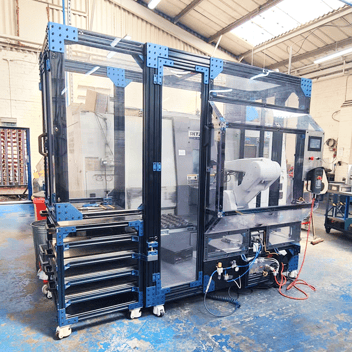
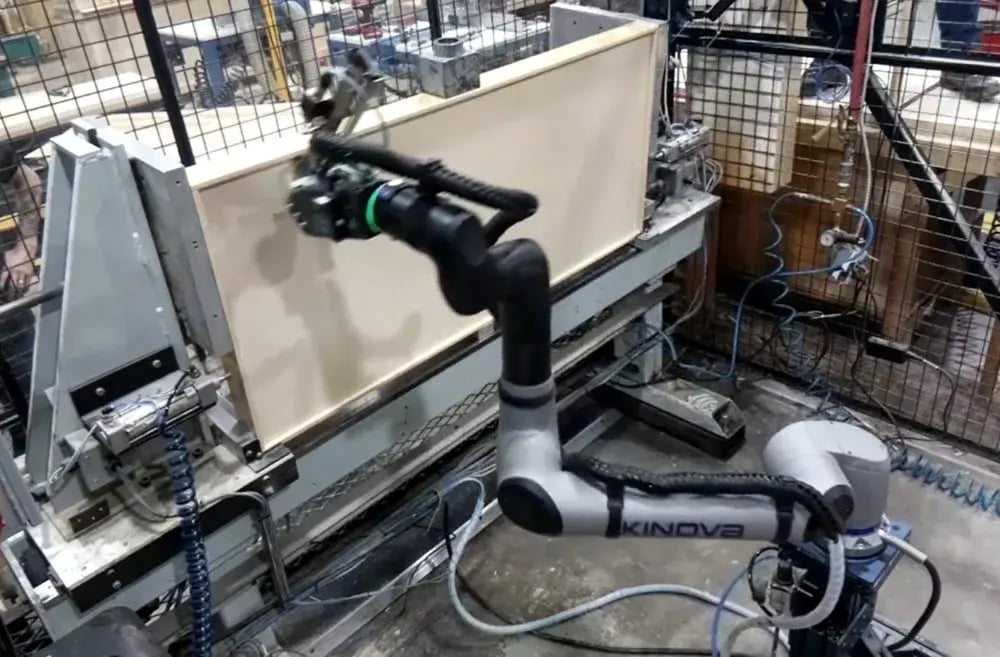
Waterville Woodcraft automated its custom drawer assembly by integrating a Kinova Link 6 cobot into a semi-automated stapling cell. The system uses sensors to dynamically measure a high mix of drawer sizes, allowing it to adjust its stapling path and apply labels without manual reprogramming. This transition successfully eliminated repetitive strain injuries for workers while achieving a 99% quality compliance rate and a 26-second cycle time, effectively solving labor shortages and inconsistent output.
Kinova x Waterville Woodcraft - Stapling

The Challenge


Our partner Waterville Woodcraft contacted us as they noticed they had a consistency issue in their manufacturing process. The company assessed the situation and considered automation to be the solution. Limitations identified included a lack of qualified (trained) manpower, non-ergonomic repetitive tasks that often cause OHS issues, and the variable quality of stapling from one employee to another. Employees were looking for solutions to ensure that each drawer the company stapled in production was done same way to reduce the quantity of drawers that do not pass inspection.
The Solution


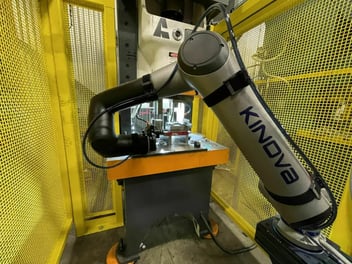
The employee-driven automation project involved the installation of the Link 6 on the assembly line. The robot consistently staples drawers regardless of their size, from small 6x6" to large 24x53" drawers. The robot dynamically adapts to the size of the drawer without human intervention or programming and provides better control over quality. In addition, the robot automatically detects the matching drawer in the production list and prints the appropriate label, improving product traceability.

KEY FEATURES

Kinova Link 6 and Josef Kihlberg stapler integration:


Provides better control over quality and consistency while eliminating hand-stapling issues.

Dynamic Size Adaptation:


Automatically handles drawers from 6x6" to 24x53" without manual programming.

Automated Traceability System:


Includes barcode scanning, sensor-based measurement, and label printing.

Real-time Monitoring:


In-cell camera tracking and database synchronization.

RESULTS


In its first month of production, the Link 6 robot stapled 6000 drawers, representing over 100,000 staples inserted. Since then, the company has gone into full time use and has produced more than 15,000 drawers after only a few months of production. Measured stapling time is 26 seconds per drawer (excluding door/press opening), beating the 30-second target. The total cycle time is 48 seconds, significantly under the 60-second target. Compliance has reached over 99%.


With the barcode scanning system, it is easy to retrieve the customer order from the database. Once the order is retrieved, the operator installs the drawer and closes the press. The sensors measure the dimensions of the drawer to determine the path the robot should take. A label is then printed to ensure traceability. This system reduces the risk of sticking the wrong label on the drawer.


In addition to real-time synchronization between the robot and the order database, a camera in the cell tracks the work done each time a drawer is stapled. Drawer production is more consistent as robotization with the Josef Kihlberg stapler has improved stapling quality and issues related to hand stapling have been eliminated.


This project reduces the amount of time it takes to train an employee. It is easier to train an employee to put drawers in the press than to staple drawers properly. In addition to increasing the quality of the drawers, the employees work less hard physically but accomplish more tasks in their day. With the tasks being less physical, the company has eliminated the ergonomic issues caused by repetitive hand stapling.

0

Cycle time per drawer measured (Target: 60 secs)

0
Compliance achieved (Minimum target: 95%)
0
Stapling time measured (Target: 30 secs)
0
Produced in the first few months
Enhanced product traceability and reduced risk of incorrect labeling
Improved production consistency and stapling quality
Reduced training time for new employees
Elimination of ergonomic issues caused by repetitive tasks
KINOVA_Link6

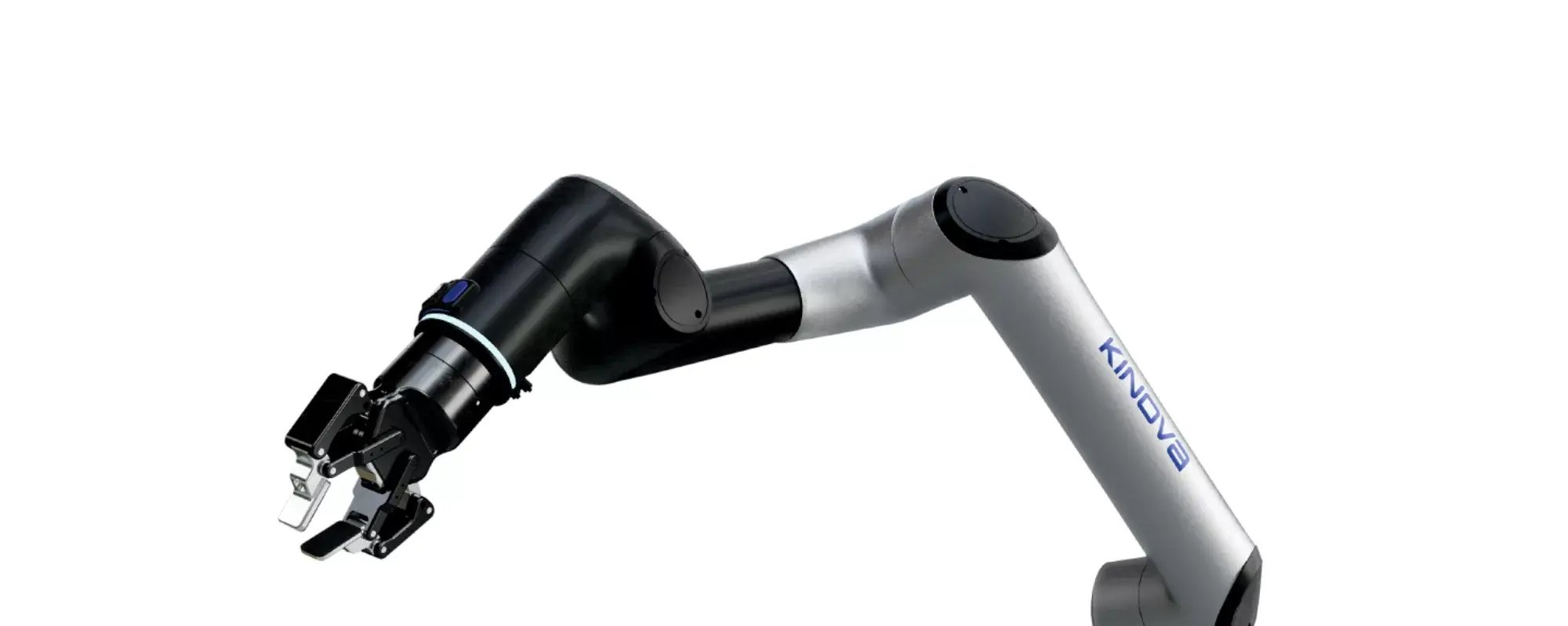
Link 6 is a latest-generation, robust collaborative robot, built for all industries that want to benefit from automation.

Showcase how you achieved real results

Submit My Success Story
No Case Study Yet?