

The Challenge
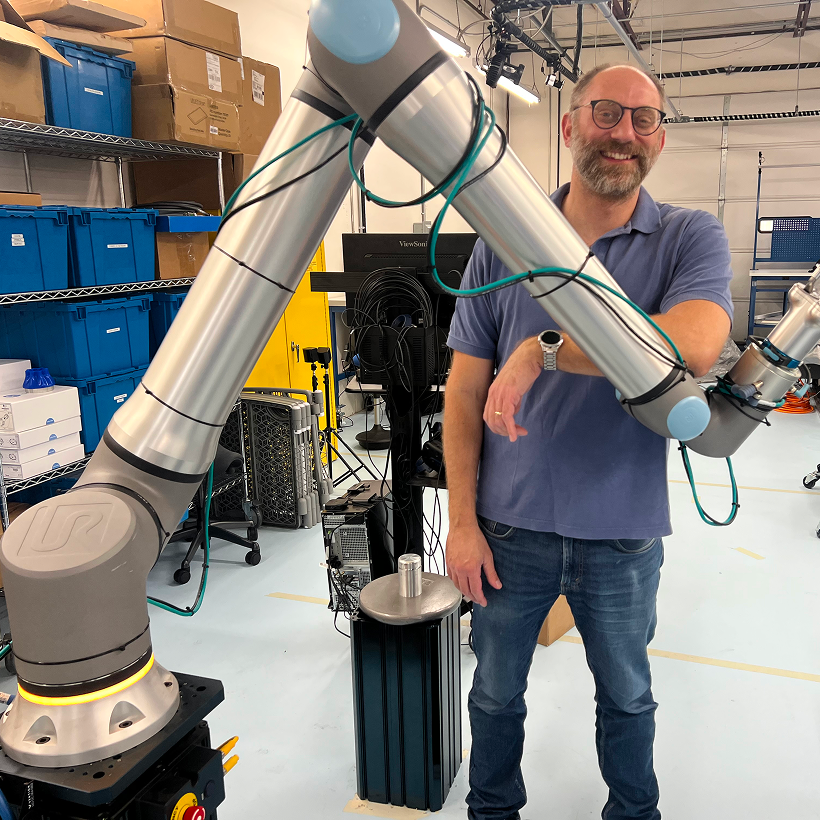
The University of Tulsa is tackling a major social challenge through robotics: helping older adults live independently at home while staying connected to their communities. Backed by a grant from the National Institute of Standards and Technology (NIST), led by Principal Investigator Dr. Rose Gamble, they planned to start the Institute for Robotics & Autonomy, a new facility focused on real-world robotics applications. The robotics research team at the University of Tulsa needed a reliable way to test how collaborative robots would perform across a variety of tasks — such as sit-to-stand motion, balance training, or assisting residents with everyday tasks inside the house. For instance, one objective for the University of Tulsa team was to eliminate the need for older adults to climb ladders by extending the cobot's vertical reach. Another focus area was enabling complex two-handed tasks using a two-cobot platform integrated with machine vision systems. Bringing this vision to life needed a fast, flexible way to procure and assemble the essential components—and seamless compatibility between hardware and software.
.png?width=695&height=820&name=collaborative-robot-arms-enable-breakthrough-research%20(1).png)