
home
arrow

Achieve 18-Month Payback and 55% Labor Reduction in High-Mix Manufacturing

Reducing dependence on skilled manual labour while maintaining high-mix production flexibility and consistent quality through an AI-driven surface finishing solution

18 Months

 payback period achieved

55%

Reduction in manual

surface finishing labour

↓↓↓

Physical strain and

ergonomic

risk for operators

"Before Scan&Go, surface finishing was one of our hardest jobs to staff and standardize. Today, we’ve reduced physical strain on our team, improved quality, and gained flexibility we didn’t think automation could offer in a high-mix environment."

Operations Manager, Canadian Manufacturing Facility

The Challenge


The manufacturer produces a wide range of customized industrial components requiring manual surface finishing, which created a strong dependence on skilled manual labour and inconsistent quality across operators and shifts. The operation faced increasing difficulty hiring and retaining experienced workers alongside ergonomic risks associated with repetitive sanding and grinding. Traditional automation had been evaluated previously but ruled out because conventional robotic solutions required rigid fixturing, detailed CAD data, and extensive reprogramming for each part variant, making them impractical for a high-mix, low-volume environment.
The Solution


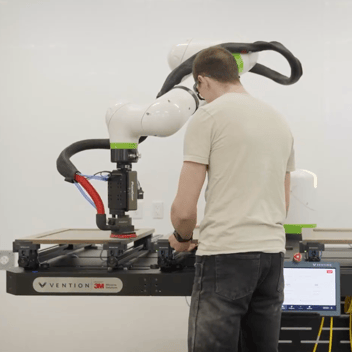
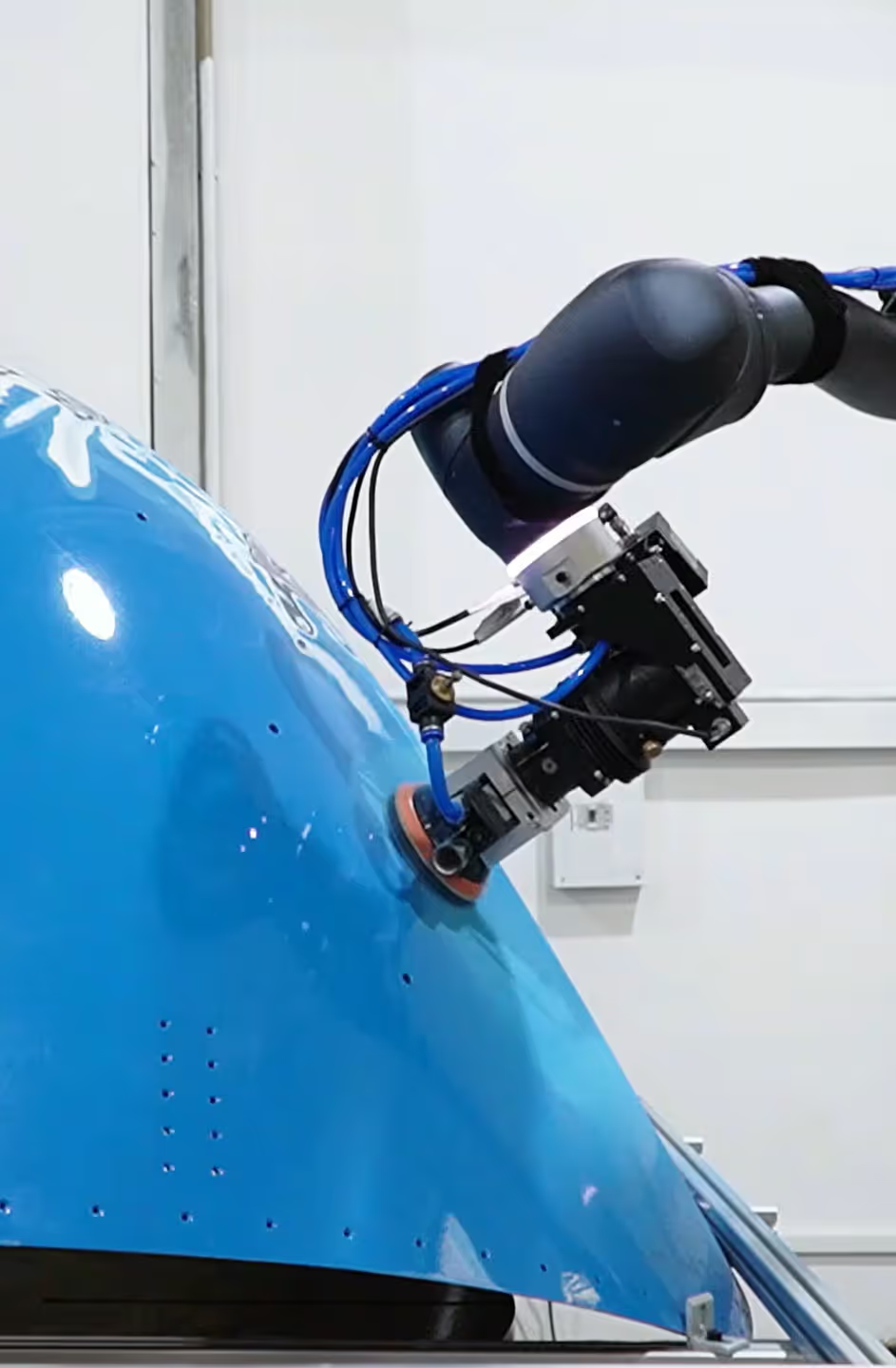
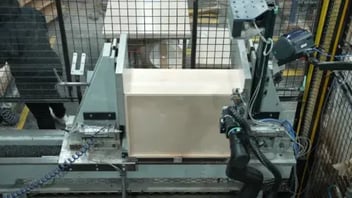
The company deployed MARI’s Scan&Go™ AI-driven robotic platform to automate surface finishing while preserving production flexibility. Using integrated 3D scanning and AI-based perception, the system captures the geometry of each incoming part and autonomously generates optimized finishing paths in real time without requiring CAD models or fixed part positioning. Operators load parts naturally, allowing the robotic system to adapt digitally rather than mechanically, which eliminated changeovers between SKUs and supported seamless integration alongside existing manual processes under a human-robot collaboration model. Deployment followed a phased approach—moving from initial setup and integration to application tuning and stable production operation—reaching a stable state in weeks with no major disruption to ongoing operations.

KEY FEATURES

CAD-Independent 3D Scanning:


Features AI-based 3D scanning that operates with no CAD dependency. 

Autonomous Toolpath Generation:


Generates optimized toolpaths automatically for variable part geometries in real time.

Adaptive Motion and Force Control:


Controls motion and force adaptively to secure consistent surface quality.

Minimal Fixturing Requirements:


Operates flexibly without requiring rigid or complex physical fixturing.

RESULTS


Implementing the MARI Scan&Go™ platform achieved an approximate 18-month payback period while driving an approximate 55% reduction in manual surface finishing labour and reallocating roughly 3,000 hours per year. This automated precision yielded a 20% improvement in first-pass yield and an approximate 30% reduction in rework, which is equivalent to redeploying 1.5 to 2 full-time skilled operators annually and gaining a 20% to 25% increase in production capacity without adding headcount or floor space. Changeover times were slashed by over 80%. Operationally, the deployment reduced physical strain and ergonomic risks, boosted worker morale by transitioning staff to higher-value roles, improved scheduling predictability for supervisors, and increased confidence in meeting delivery commitments.  

0

Payback period achieved

0

Reduction in manual surface finishing labour hours

0
 Reduction in changeover time achieved 
0
Reduction in rework achieved
 Reduced physical strain and ergonomic risk for operators
Improved morale by shifting workers from repetitive tasks to higher-value roles 
Greater consistency across shifts and operators
Improved scheduling predictability for supervisors and increased confidence in meeting delivery commitments
No-programming surface finishing workflow demo with MARI Scan&Go

Showcase how you achieved real results

Submit My Success Story
Get The Case Study Toolkit